


The installation of concealed air conditioners is linked to construction, which must be taken into account when building walls, pouring ceilings, and performing plastering work. It goes through several stages carried out by specialized air conditioning companies.
Concealed air conditioners are one of the air conditioning systems suitable for large-scale facilities such as commercial spaces, industrial companies, and large buildings. They are effective in cooling the air, but their installation requires designs to be made when constructing and planning the building, taking into account that this must be done before pouring concrete ceilings or carrying out plastering work.
The installation of concealed air conditioners involves several stages, during which it is necessary to hire a specialized company with a team of professional technicians capable of installing pipes and air ducts, insulating the air conditioner, and installing the indoor and outdoor units and the connections between them.
Hidden air conditioning is characterized by being one of the air conditioning systems that helps distribute air evenly throughout rooms and units, and it is one of the practical choices that most project owners seek to install.
Its components consist of an outdoor unit, copper pipes, grilles, and a thermostat. It is considered to be of average cost compared to other air conditioning systems, is easy to maintain, operates quietly, and does not affect the aesthetic appearance.
Steps for installing concealed air conditioners
Installation of concealed air conditioners begins during the construction of the building by implementing some of the air conditioner's executive plans, which determine the location of the air conditioner's outdoor unit.
The air ducts, known as ducts, are also specified, as are the air outlets, known as grilles. The design also shows the connections for the copper pipes that connect the indoor and outdoor units of the air conditioner. All of this is included in the plan before construction or ceiling pouring begins. Then, the practical steps for installing the air conditioner begin, which are as follows:
First: Laying copper pipes
The technician determines the closest location to the indoor unit and begins installing the copper pipes in the walls, ensuring that they are straight and short in length so that maintenance work on the air conditioner can be carried out easily afterwards. This also provides the highest degree of cooling for the space. If you would like to know more details, please refer to Dakt Factory in Riyadh and its 5 most important features
Second: Installation of drainage pipes
The installation of drainage pipes is done from the interior units, where these pipes extend through the walls. Their diameter is determined by the technician, and this diameter varies from one type of air conditioner to another depending on the amount of water that is drained. In addition, an elbow is installed to prevent any bad odors from returning through the drainage network into the air conditioner.
Third: Extending copper pipes
Copper pipes are inside plastic pipes, and the appropriate diameter is selected according to the brand of the air conditioner, ensuring that the lengths that are extended are permitted in the catalog. They are customized by the air conditioner company and can be horizontal or vertical. It is recommended to deal with a company that specializes in this field because they have technicians who are familiar with all these measurements and can determine the appropriate lengths.
Fourth: Control Unit Position
The control unit is called a thermostat and is installed in the wall, hidden from view. It is usually placed next to the room's electrical outlets or light switches. Each indoor air conditioner unit has its own control unit, and they are connected to each other through wires that are extended in copper pipes that reach the outdoor unit of the air conditioner.
There are modern types of air conditioners with smart control units that operate using modern technologies. They are connected to the building's operating systems, through which most of the systems in the place can be controlled, such as lighting, curtains, and other smart home devices. If you want to know more, check out Explanation of the condenser system in air conditioners
Fifth: Duct design: Concealed air conditioners
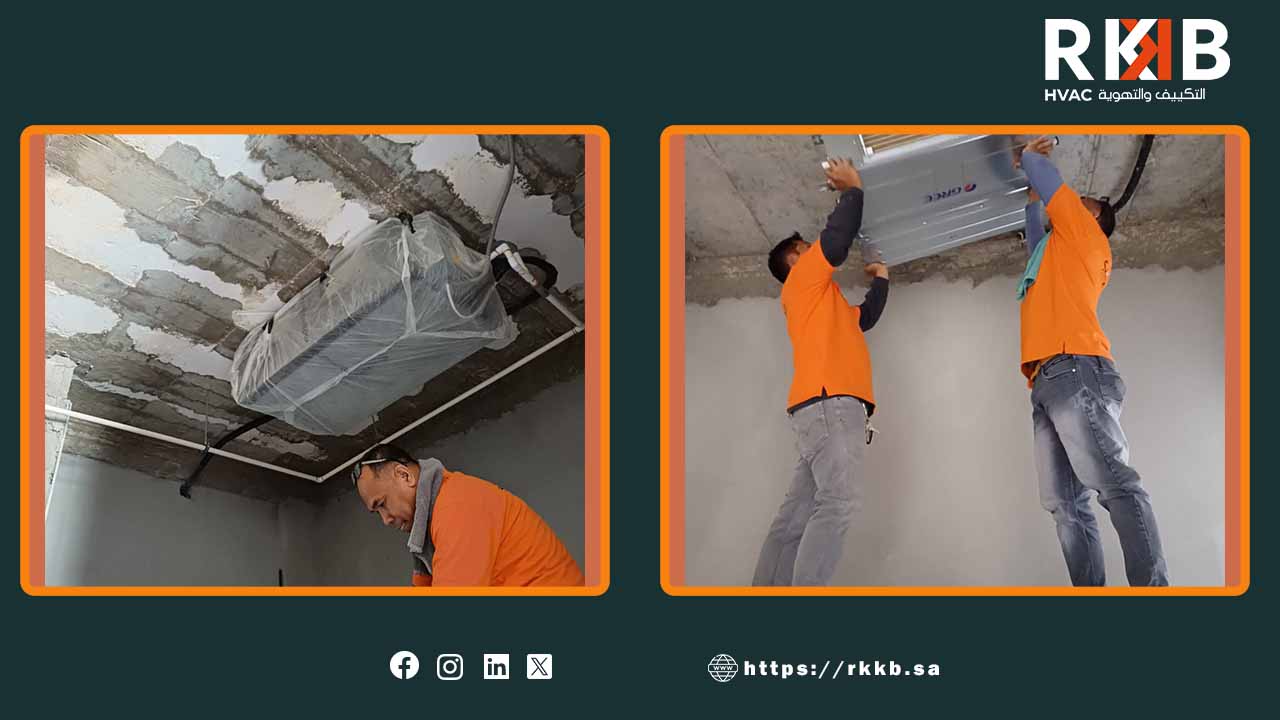
Duct design work must be carried out by an experienced specialist technician, as they will take measurements on site and take into account important criteria such as the amount of air coming out of the indoor unit, which varies from one type of air conditioner to another. This helps determine the permissible speed of airflow through the duct, as residential buildings usually require a lower speed, unlike malls, commercial buildings, and industrial facilities, which require a higher speed.
The duct design process involves determining the size of the sheet metal required for installation and the quantity needed in order to order it and begin cutting it to fit the space.
Sixth: Isolation of the duct
Insulating the air ducts of a concealed air conditioner is done using glass wool, which reduces the temperature inside the duct and keeps the air cool without being affected by any other external factors. To secure the insulation to the duct, some glue is added, and sometimes the insulation is attached to the duct at equal intervals.
Insulation is not limited to ducts, but also includes air boxes that are insulated from the inside or outside, as well as the connections between the indoor unit of the concealed air conditioner and the air ducts.
Seventh: Installation of grilles: concealed air conditioners
Grilles are air vents found in rooms. They come in round or square shapes, and each customer can choose their preferred type, or it can be determined according to the requirements of the space. These grilles are placed in the plaster ceiling and distribute air evenly throughout the room, either laterally or vertically.
The technician determines the speed at which air flows through the grilles based on the size of the space and the amount of cool air needed to provide the appropriate atmosphere. This is indicated by codes in the grilles catalogs, and the catalog specifications must be followed to avoid any annoying noises or vibrations during air conditioner operation.
Eighth: Making maintenance openings
Concealed air conditioning units require periodic maintenance to preserve the life of the air conditioner and increase its operating efficiency. This maintenance includes copper connections, electrical connections, cleaning filters, and removing any deposits in the drain pipes.
Therefore, an appropriate opening should be made in the ceiling to allow for maintenance work, and a space should be allocated below for the installation of the indoor unit, at a specific distance as specified in the air conditioner manual. These openings facilitate maintenance work in the event of malfunctions or periodic maintenance.
Ninth: Concealed air conditioners Dr. tests
When the technician has finished installing the sheet metal, fixing the internal units, and connecting them, it is time to check that there are no leaks in the air ducts. If any leaks are found, they are isolated to keep the air cool and ensure that the rooms are cooled to the required quality.
The most important tests performed by technicians are smoke tests, light tests, and pressure tests. Each test has its own specific codes and is performed on grilles or sheet metal connections to verify that the amount of air reaching the units is sufficient for cooling.
Conclusion
Rukab Company takes many steps to install concealed air conditioners, starting with the construction of the space, where the air conditioner designs are created by one of the company's specialized technicians to take this into account when pouring the ceiling or building the concrete. After that, the construction and extension of copper pipes and the drainage of water from the internal units of the air conditioner begin, and then the pipes are extendedbetween the indoor and outdoor units.
The technician then adjusts the control unit and designs the ducts through which cold air passes to all parts of the building. It is then insulated with fiberglass to keep the air cool. The grilles are then installed, and it is ensured that the maintenance openings are designed as required. The air conditioner is then tested to ensure that the air reaches all parts as required.


