


Installing a concealed split-system air conditioner is considered a practical alternative to central air conditioning, which is often expensive, because a concealed system is less costly and requires less maintenance.
A concealed split-system air conditioner is an air conditioning unit consisting of two units: the first is an outdoor unit installed outside the building, and the second is an indoor unit located in the space being cooled, specifically in the ceiling.
In some cases, they are installed outside the rooms and are connected by copper pipes that carry air into the room, thereby cooling it.
Some people prefer to install concealed split-system air conditioners instead of central air conditioning because they are less expensive in terms of both installation and maintenance, and they also help reduce electricity consumption.
It also offers the same performance, making it a good choice for people who cannot afford the high cost of a central air conditioner. It serves the same purpose and offers the same benefits, as it distributes air evenly throughout the space, does not detract from the aesthetic appeal, and operates quietly.
Components of a Concealed Split-System Air Conditioner
Concealed air conditioners are a type of air conditioner that is both affordable and energy-efficient. They consist of two parts, which we will explain in detail below:
First, the outdoor unit
The outdoor unit contains a condenser and a fan; the fan draws in air and forces it to pass through the condenser until it cools, after which it flows out in the same direction as the fan’s rotation to prevent an increase in air pressure.
The outdoor unit also contains a compressor, which acts as a pump that draws in and compresses the refrigerant, thereby increasing the pressure of the gas used to cool the air.
Make sure the condenser is always clean and free of any dust, especially during certain seasons, because any impurities on it will negatively affect the balance of the crystal blade, causing it to wear out, become damaged, and fail to function properly. You can learn more by reading The best central air conditioning maintenance at Rukab Company.
Second, the indoor unit
The indoor unit consists of evaporator coils, whose main function is to distribute the air after it exits the pipes as a result of the flow of Freon gas, thereby cooling the space.
The indoor unit of a concealed air conditioner is installed on drywall or in a drop ceiling because cold air is denser and therefore sinks to the bottom of the room, while hot air rises to the top.
When installing, be sure to Outdoor Unit It must be lower than the indoor unit to prevent oil from leaking out of the compressor when the Freon gas is vented.
Copper pipes are used to connect the two units, and they are well insulated against heat.
Benefits of Installing a Concealed Split Air Conditioner
The concealed air conditioning system has attracted many customers, who have chosen to install it because of its many advantages, which we will detail below:
- The concealed air conditioner works to purify the air of any impurities or dust particles it contains.
- This type of air conditioner is known for its elegant designs that do not detract from the room's appearance.
- Concealed air conditioners are easy to install anywhere, regardless of the space's size, because they are very compact.
- It helps reduce electricity consumption and operates silently, ensuring that you Peace and Comfort.
- It is easy to install, and its replacement parts and maintenance are reasonably priced and readily available.
- The air conditioner removes moisture from the air, making it the best choice for restaurants, cafes, offices, clinics, and commercial spaces.
You can find out more details by visiting Types of Concealed Air Conditioning Systems, Their Advantages, and Their Disadvantages.
Steps for Installing a Concealed Air Conditioner
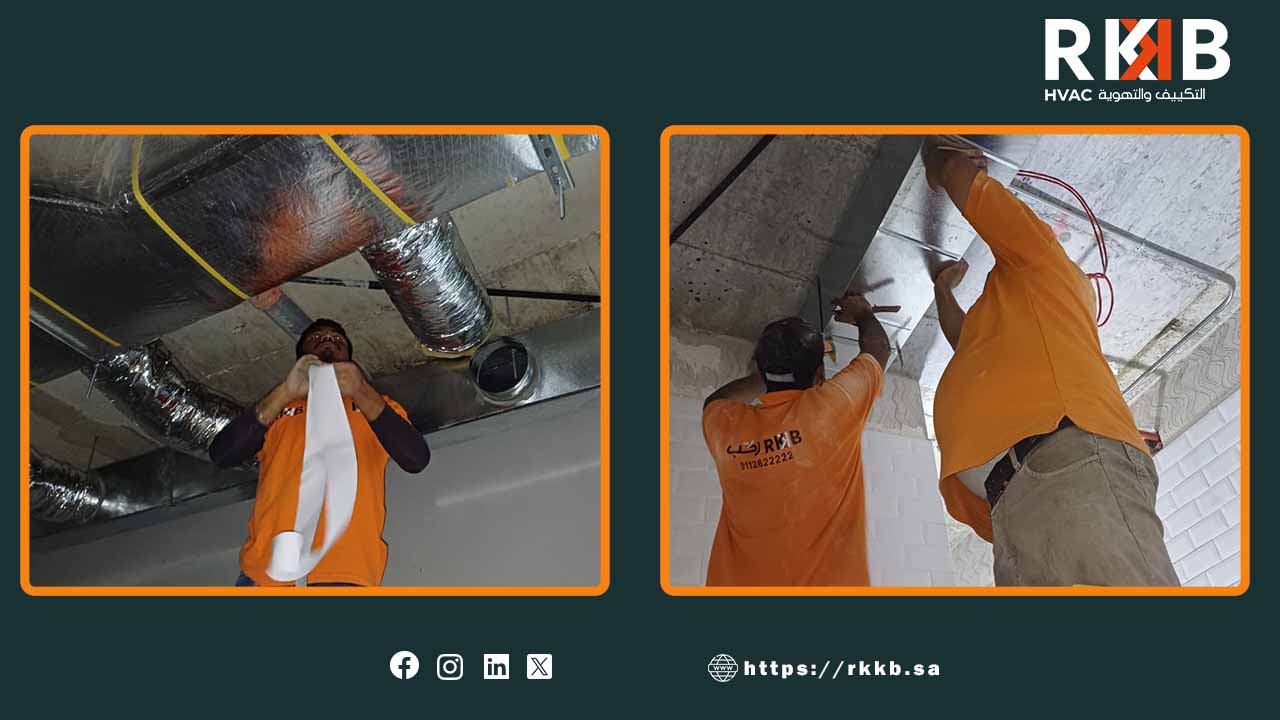
The installation of a concealed air conditioner involves several steps, but they are all straightforward, especially if you hire a company that specializes in air conditioning work. These steps are as follows:
- Inspect the site, determine the installation location, and ensure that there are no issues the technician might encounter while installing the device on site.
- Begin purchasing the materials needed for installation, make the electrical connections, and install the radiator and its brackets.
- Install the outdoor and indoor air conditioning units, then connect them to each other using copper pipes and install the electrical connections.
- The final step is to insulate the air conditioner using thermal insulation, which prevents adverse temperature effects.
Things to Keep in Mind When Installing a Concealed Air Conditioner
It is recommended that concealed air conditioning units be installed by a specialized company, keeping in mind that certain conditions must be met at the installation site; we will explain these in detail below:
- A feasibility study and site planning should be conducted to determine the best type of concealed air conditioning system and its purchase price.
- A concealed air conditioner should be installed in a room with a high ceiling, where it is connected to ducts and fitted with a series of vents; therefore, there must be sufficient distance between these connections and the people in the room to prevent them from developing any health problems related torespiratory system.
- The dimensions of a concealed air conditioner should be selected based on the size of the space to ensure adequate cooling without excessive electricity consumption; this step is crucial for extending the unit’s lifespan.
- Special brackets must be installed for copper drainage pipes or air ducts, as well as a thermostat to control the temperature.
Operating Instructions for the Concealed Air Conditioner
Rakab provides some guidelines to help extend the lifespan of your air conditioner, the most important of which are as follows:
- All ventilation openings, such as windows and doors, should be closed while the air conditioner is running to maintain the temperature in the room.
- It is best to install air curtains in the space so that they can help reduce cold air leakage and thereby optimize the air conditioner’s energy efficiency.
- When installing a concealed split-system air conditioner, you should choose high-quality, thick insulation to protect the outdoor unit from harmful sunlight.
- When you’re considering installing an air conditioner, you should consult a specialized air conditioning company so they can help you choose the right type of unit for your needs, based on your home’s requirements, its exposure to the sun, its size, and any other factors that might affect cooling.
- The air conditioner should be installed in a suitable location that maintains its cooling capacity in order to extend the unit's lifespan.
- It is best to hire an air conditioner cleaning company that performs regular cleaning of all parts of the unit, such as the filters, to ensure that its cooling capacity is not compromised; this should be done at least twice a year.
- Regular maintenance of the air conditioner must be performed consistently by a qualified technician to remove any debris or obstructions that prevent airflow and to replace any worn-out or damaged parts before the unit stops working entirely or its cooling efficiency decreases.
- Care should be taken to choose a suitable location for installing air conditioners so that maintenance work can be performed easily.
Conclusion
Rakab explains that, despite the many advantages of installing a concealed split-system air conditioner, it does have a number of drawbacks, since having the unit located outside the room helps preserve the appearance of the room or home.
However, this makes it difficult to identify problems because the user cannot see the air conditioner and is unaware of any issues affecting the outdoor unit until they become more pronounced and clearly impact the unit’s performance.
Maintenance and installation work for concealed split-system air conditioners tends to be more expensive than for other types of air conditioners because their replacement parts are rare and rarely available on the market.
Another drawback of this type of air conditioner is that it causes the plaster in the room to crack or break, which results in additional repair costs for the building owner.


